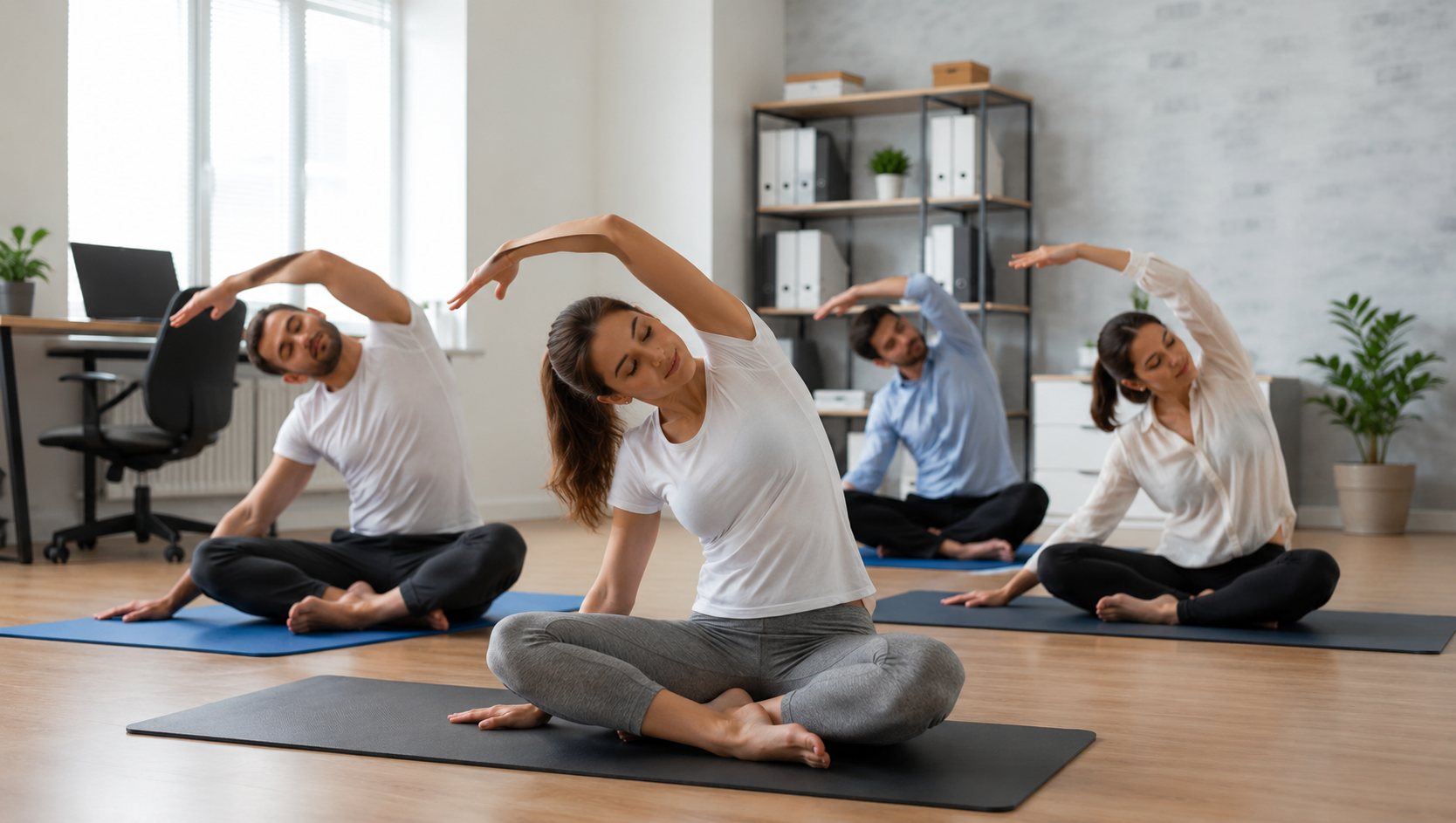
Spending long hours at a desk can leave the body feeling stiff and tired, especially when movement is limited throughout the day. Yoga for desk workers offers a simple way to introduce gentle movement into a busy routine without requiring a large space or advanced skills. With a few mindful stretches, office workers can give their shoulders, backs, hips, and legs a chance to move after extended periods of sitting. Exploring https://yoga365.online/ can also help beginners discover practical ways to stay connected with their bodies during the workday.
Why Sitting for Long Periods Can Feel Uncomfortable
Sitting for extended periods often means staying in one position for too long. The shoulders may gradually round forward, the neck may move toward the screen, and the hips may remain bent for hours. These habits can contribute to stiffness and general discomfort, particularly when people forget to take regular movement breaks.
Yoga does not need to replace an entire work routine to be useful. Short, comfortable movements can help interrupt long periods of stillness and encourage greater awareness of posture. Changing positions regularly and taking brief walking breaks are also valuable parts of a balanced workday.
Gentle Neck and Shoulder Movements
The neck and shoulders often feel tense after hours of looking at a computer screen. Gentle neck movements can help bring attention to areas that feel tight. Slowly turning the head from side to side or tilting one ear toward the corresponding shoulder may encourage comfortable movement without forcing the stretch.
Shoulder rolls are another simple option. Lift the shoulders slightly, move them backward, and allow them to relax before repeating the movement at a comfortable pace. Keeping the breathing steady can make these movements feel less rushed.
Anyone experiencing pain, dizziness, or unusual symptoms should stop the movement rather than trying to stretch through the discomfort.
Releasing Tension in the Back and Hips
The lower back and hips may feel restricted after sitting for much of the day. A seated spinal movement can offer a gentle way to explore mobility. Sit with both feet supported, lengthen the spine naturally, and rotate the torso slightly to one side without pulling on the chair or forcing the movement.
When space allows, standing hip movements can also help change the body’s position. Stand with the feet comfortably apart, keep the knees relaxed, and shift the weight gently from one side to the other. These movements should feel controlled and stable rather than intense.
For more ideas, explore simple movements for office comfort and adapt each exercise to your workspace and comfort level.
Making Movement Part of the Workday
A practical desk yoga routine can fit into short breaks between tasks. Some people prefer to move before starting work, while others find it helpful to stretch after a long meeting or during an afternoon break. The most suitable time is one that allows movement to become a manageable habit.
A clear space, stable chair, and comfortable clothing can make the experience easier. Avoid movements that require balancing on an unstable surface, and do not force the body into a deep stretch. Gentle movement, regular position changes, and brief walks can work together to support a more comfortable working day.